Karl. M. Illig, MD [1911 - 2008]
by Dr. Petra A. Illig,
M.D. Jan 2009
Click
HERE
for Petra's web page
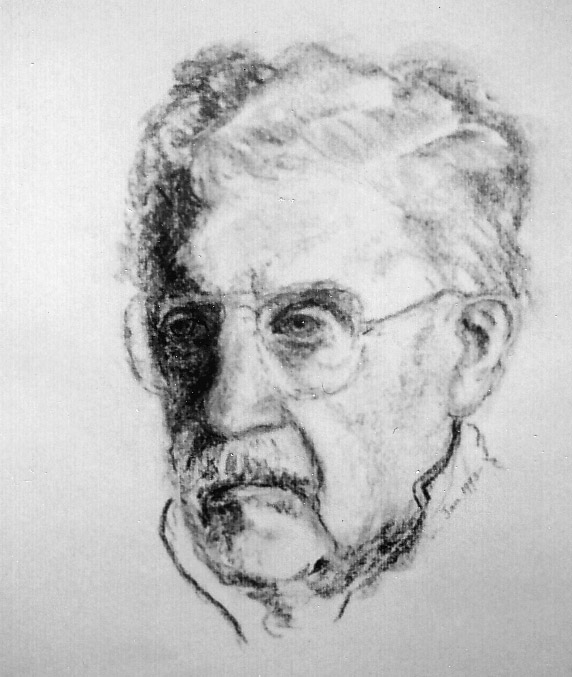
Karl's self portrait ca.
1992
Karl's Paintings
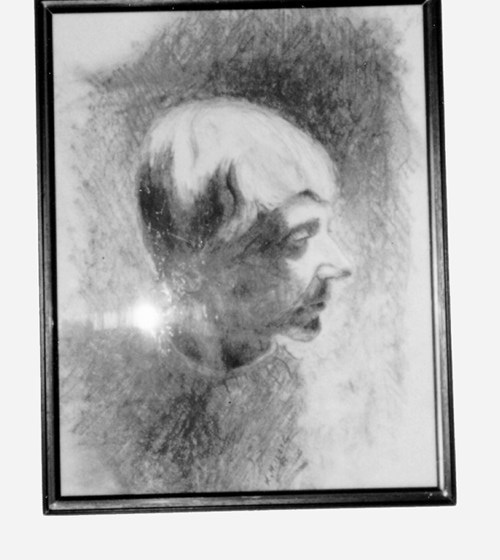
Karl's portrait of wife Renata
Renata's poetry
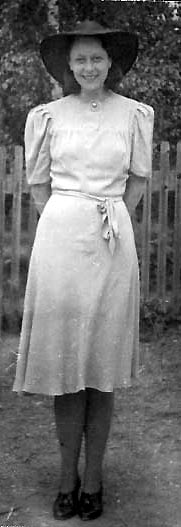
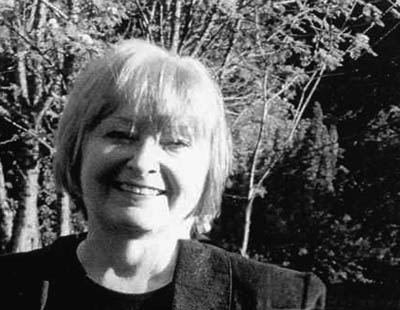
Wife / mother Renata 1943
Renata's
poetry:
Spätlese
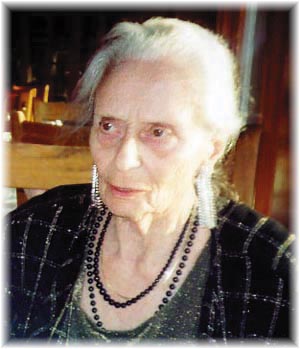
Except for specialty medical training, Karl Illig’s entire public education occurred between WWI and WWII, and his attitudes and senses of humanity and security were shaped by strong influences during a very difficult time in European history. His life span was long – over 97 years—and he witnessed more technological changes than any previous century in human history — so far. He recalled seeing his first powered airplane flying off a field in Bavaria as a young boy, and watched (and discussed) the beginning of human space flight.
He began his medical training in Heidelberg, Germany, and then was drafted as a medical officer into the German Army Corp in February 1940. By then he was already widowed, as his young wife had died of tuberculosis in a sanitarium. Her name is not known to his survivors.

Karl was raised as a Catholic in his youth in Germany. As a teenager he became a Protestant, joining the Lutheran church. In the early 1960s the Illig family attended the Congregational church in South Dakota. Gradually he became an atheist. He had been a Freemason most of his adult life. In the 1970's he quit the Masons because that group demanded a belief in a higher power.
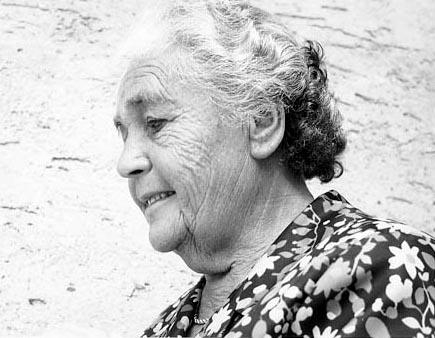 Oma - Karl's mother Kunigunde Grötsch 1967. Oma visited Pierre, SD in 1960 Photo H. Illig; Langendiebach, Germany Fliegerhorst Langendiebach |
Most of his time during the war was spent in Norway. He
once told a story of how an attack of appendicitis saved his life. He was
about ready to be shipped out to the Russian front when he developed
abdominal pain which required surgery. The rest of his battalion continued
on, and to his knowledge, none survived.
During this period of time he also worked as an army physician in Graz,
Austria, where he met Renata Fuchs [Renata's
poetry
-
Spätlese]. They were married in November of
1944 in a civil ceremony. Interestingly, neither of their mothers attended
the wedding as a protest to the union. Karl was soon back in Norway, and
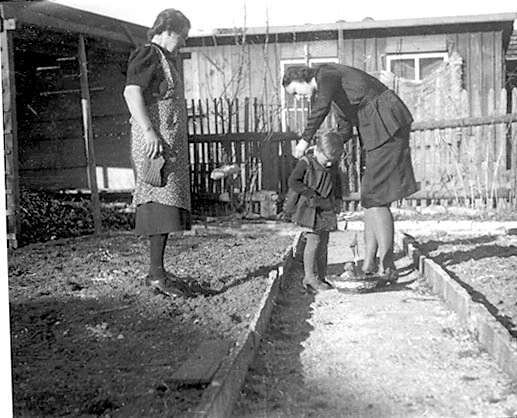
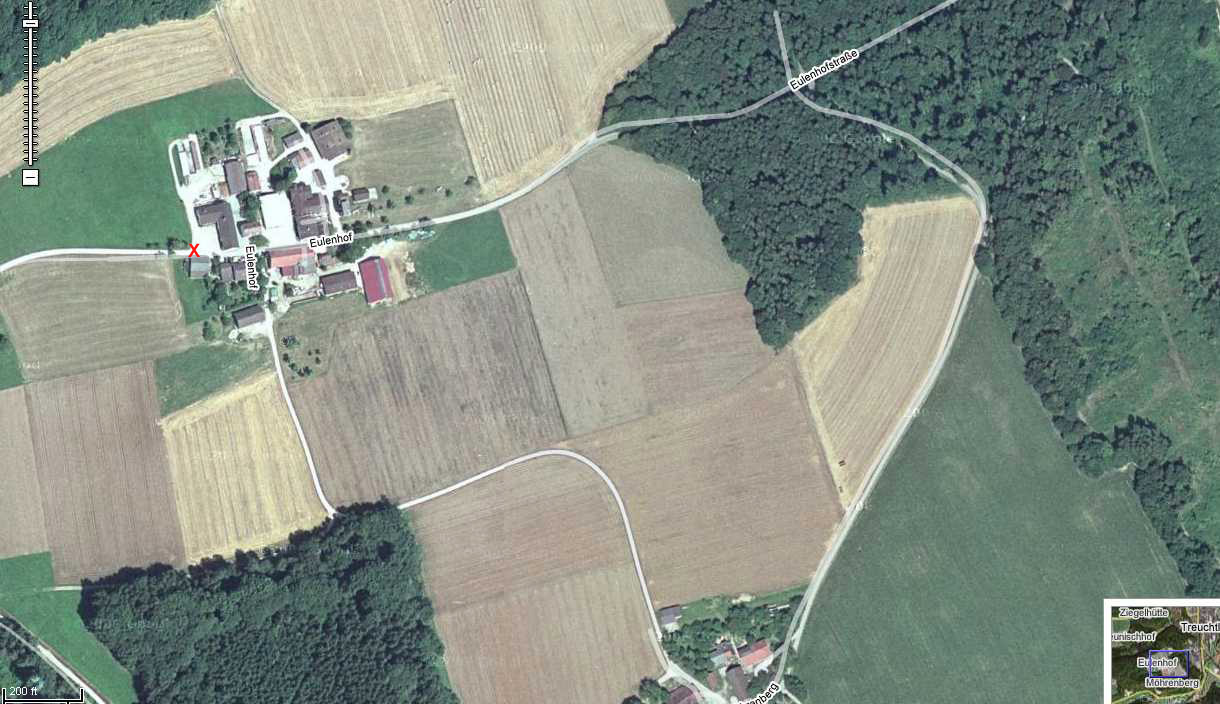
his new wife was living with his mother in Treuchtlingen, Germany, where she
gave birth to their first child, Harald, in April of 1944.
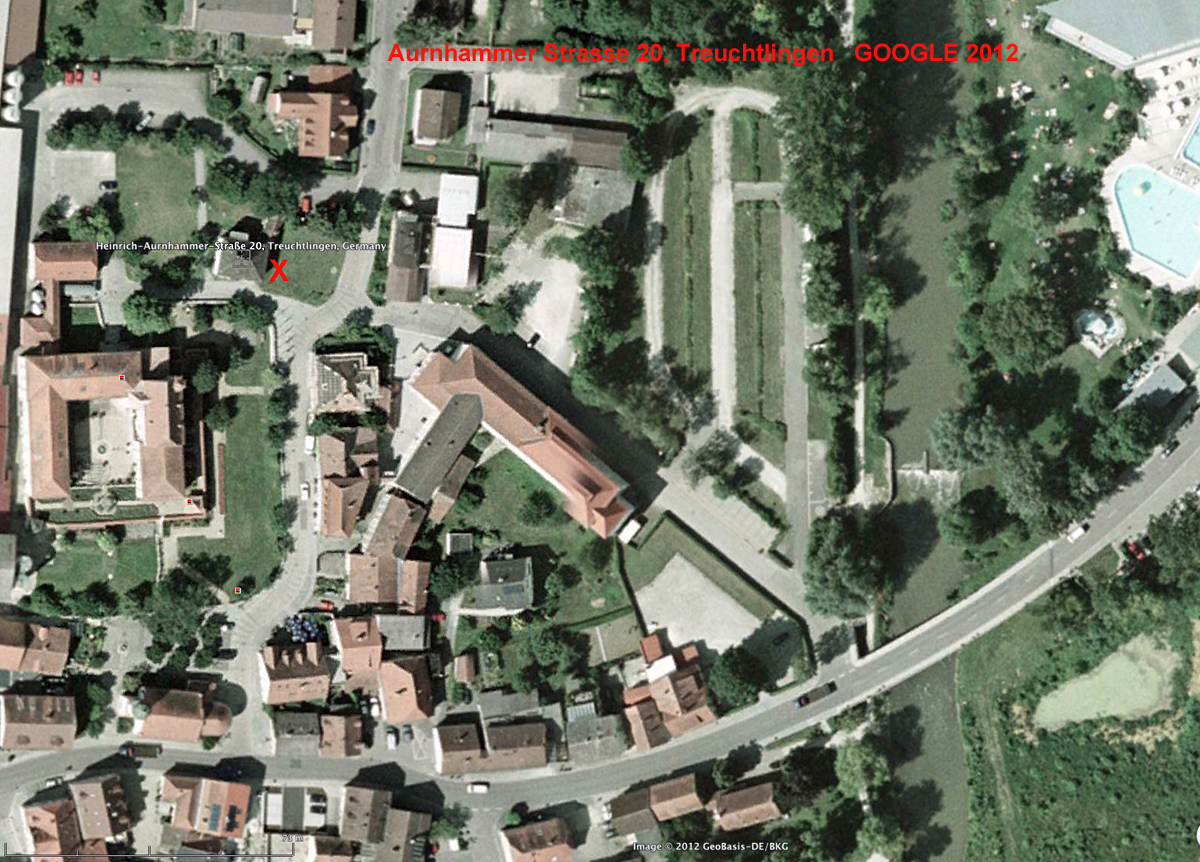 Karl's parents' house. Heinrich-Aurnhammer-Straße 20, Treuchtlingen, Germany Backyard: Oma, Harald, Renata |
Treuchtlingen, a major railroad intersection was heavily bombed during WWII. Wife Renata used to tell stories about how she would ride a bicycle from farm house to farm house looking for food for her child, Harald, often stealing eggs from a nearby chicken coop.
In May, 1945, the Army Corp surrendered to the British, and shortly thereafter Karl was shipped to Bremerhaven to US and French internment. Unfortunately, President Eisenhower declared these soldiers to be “Disarmed Enemy Force” (DEF), therefore not protected by the Geneva Convention. During this period of time prisoners often died of starvation and exposure, and many were kept imprisoned until the 1950s.
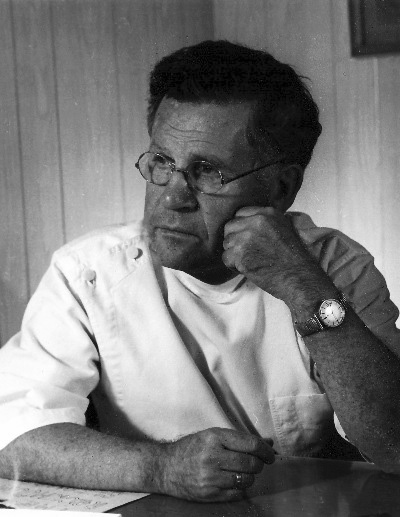
Karl then finished his residency in ophthalmology in Bonn, Germany. After Petra (1953) was born, he decided to emigrate to the US or to Canada, and while waiting for the paperwork to go through – which took 7 years - he took his family to Addis Ababa, Ethiopia's capitol city, where he was the ophthalmologist of the Haile Selassie I Hospital (renamed Yekatit Hospital) for three years.
In April 1957, the Illig family emigrated to the United States from Ethiopia via New York City (pier 88 -- Ellis Island had already been closed by then). While obtaining his medical licensure, Karl worked at a state hospital in Ogdensburg, NY. In 1958 Karl hung out shingles for his ophthalmology practice; he moved his family first to Brookings, SD, then to 802 W. Pleasant Drive in Pierre, the capitol city of South Dakota.
|
|
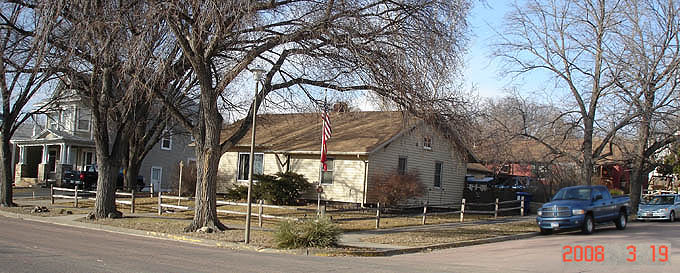 There Karl established an ophthalmology practice for the
next nine years. He was the first ophthalmologist in South Dakota to have
performed a
corneal transplant.
There Karl established an ophthalmology practice for the
next nine years. He was the first ophthalmologist in South Dakota to have
performed a
corneal transplant.
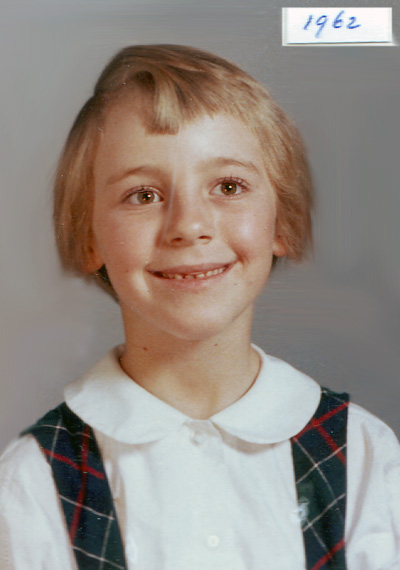 By
now, Petra was in first grade and
Harald was in
high school. Soon Karl took up flying
lessons. It was as a relatively low-time pilot (about 200 hours) that
Karl experienced a catastrophic engine failure while flying his Piper
Cherokee 140 at night, in Florida, returning form a medical conference with
his wife and daughter on board. He never lost his concentration and
executed a perfect emergency landing -- between cars
on an unlit rural highway! Renata made Karl quit flying after that, but he
was known to occasionally take flying lessons again or fly with Petra in
much later years.
By
now, Petra was in first grade and
Harald was in
high school. Soon Karl took up flying
lessons. It was as a relatively low-time pilot (about 200 hours) that
Karl experienced a catastrophic engine failure while flying his Piper
Cherokee 140 at night, in Florida, returning form a medical conference with
his wife and daughter on board. He never lost his concentration and
executed a perfect emergency landing -- between cars
on an unlit rural highway! Renata made Karl quit flying after that, but he
was known to occasionally take flying lessons again or fly with Petra in
much later years.
Link: Petra's website.
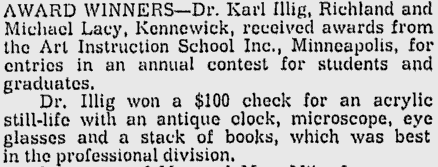
After the Oahe Dam on the Missouri River near Pierre, SD was completed, the Illig family moved to Richland, WA, where Karl established a busy ophthalmology practice for the next two decades. Harald by this time was in the US army, and A r n o was going to school in Austria in order to avoid the draft. This was the time in Karl and Renata Illig’s lives where they started enjoying the fruits of their hard labor and living their version of the American dream. They enjoyed their friends - many of whom were scientists and art lovers.
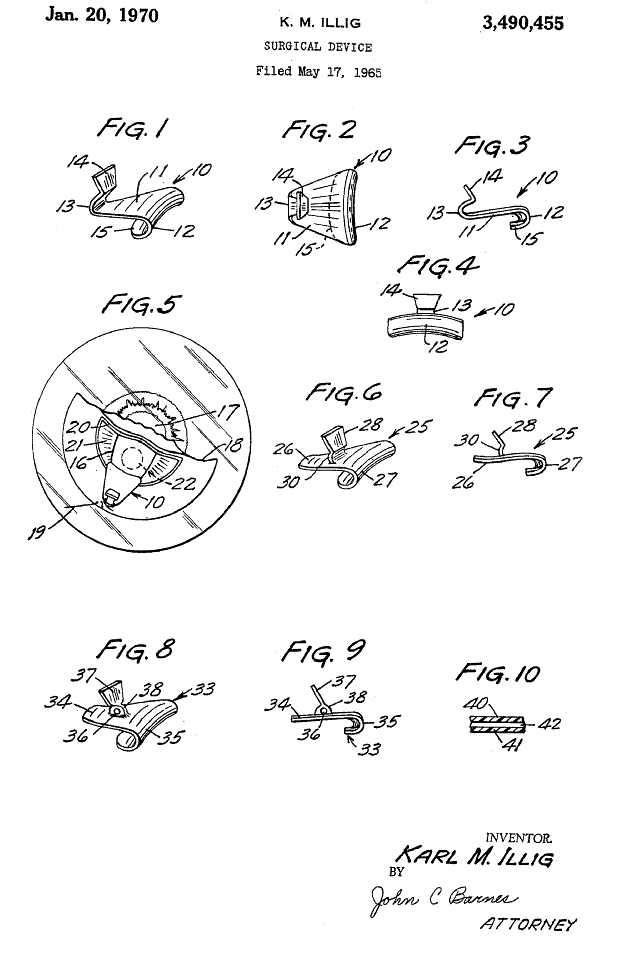
K.M. Illig Patent 3,490,455;
Download PDF


Karl had been
drawing and painting all his life, and loved collecting and
repairing art and artifacts
[example].
Music was a huge part of his family life well. He also loved building
and inventing things and he frequently combined his craftsmanship with art
in his workshop.
He even made many of his own ophthalmologic instruments (He had a
US patent on an instrument for cataract operations, amongst others).
Karl was talented.
Karl combined ophthalmology with art. He dwelt on the understanding of
depth perception
(see
Karl's
article), probably because if his
background in optics.
After the WWII, he made prosthetic eyes for war veterans
in Germany - he would paint, using watercolors, the iris of a veteran's good
eye onto paper and imbed that into a Plexiglas prosthesis which he
manufactured and fitted in his workshop.
In 1989 Karl and Renata relocated to the Kent-Auburn area to be close to
their daughter and her children, Peter and Lena. There they made
another set of wonderful friends, which is a recurring trait of Karl and
Renata throughout their life -- and wherever they went. Despite the
difficulties he experienced early in adult life, he never lost his sense of
humor, and endeared himself to many people. His intelligence and
classical education from a bygone era drew many people to him and to Renata.
His German heritage came through in everything that he touched.
A further relocation, this time to Salt Lake City in Utah, occurred in 1999,
once again, to be close to daughter Petra and son H a r a l d and to
the grandchildren Peter and Lena. Unfortunately wife Renata suffered a
medical emergency shortly after the move, and passed away suddenly on June
25, 1999, at the age of 89. Karl understandably became unhappy
and restless after losing his wife of nearly 55 years.
In order to assist him with the daily chores, Petra hired a live-in housekeeper named Jana Vance, aka Jana Cadden, Janette Cadden, Jana Illig, JC Vance, who soon endeared herself to Karl, to the point where he was in love with her. Despite urging to the contrary by his children, in part because of the 33 year age difference, they married and began a life together that spanned several communities in the last 8 years of Karl’s life. They lived in the state of Washington - Richland, Spokane, Stephenson, and Vancouver. (link: the house)
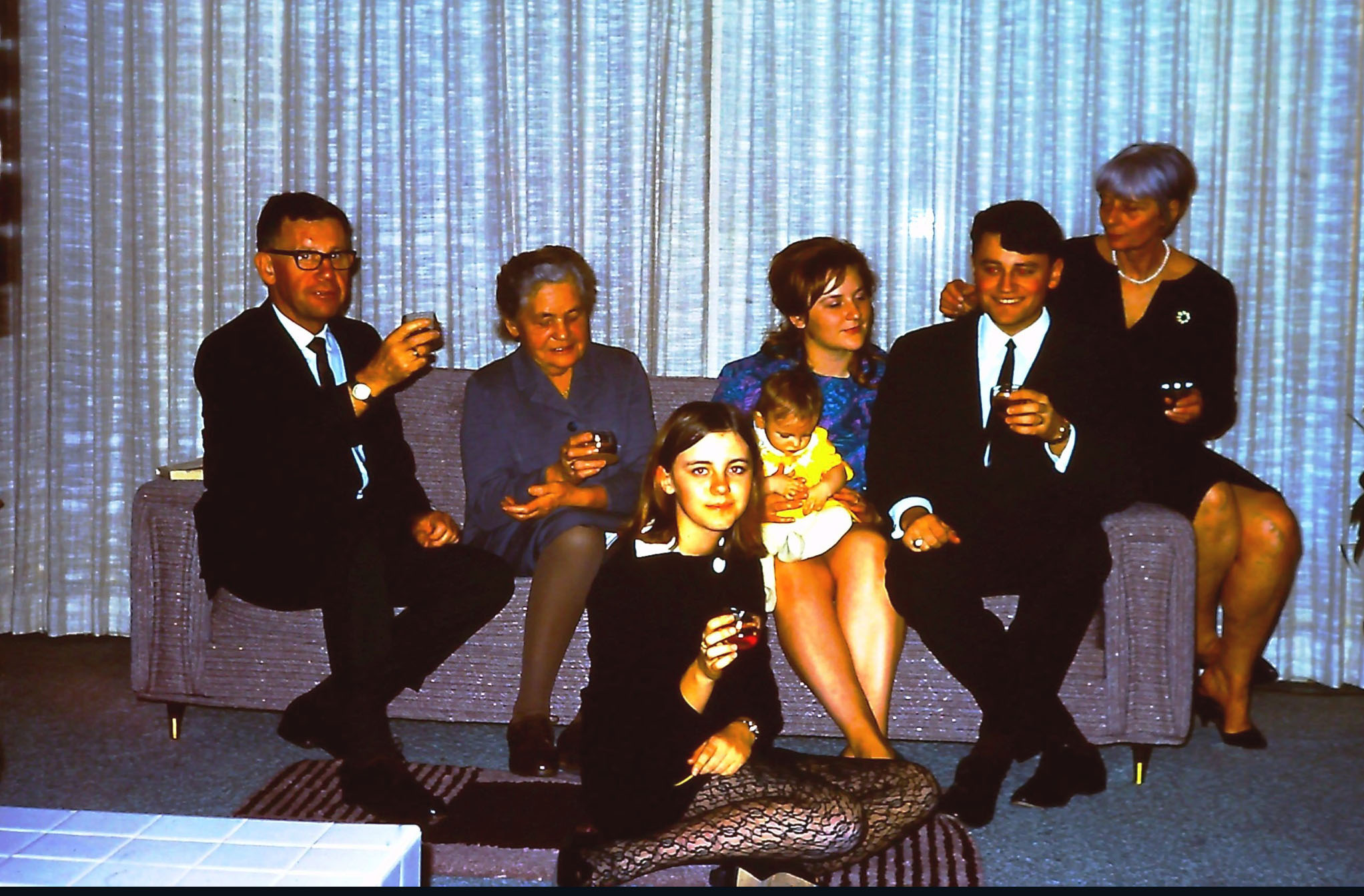
Four generations - Richland, WA, ca. 1971. Karl, Oma, Petra. Sonya, Linda, Harald, Renata.
|
She
seems to have talked Karl into
signing over his
house to her:
|
Janette Cadden a.k.a. --
|

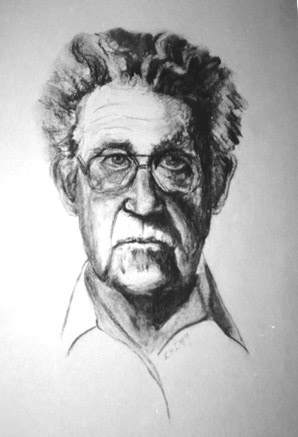
Karl's self portrait ca.
1982
Karl's Paintings
These moves were not easy for Karl, who was by then well into his 90’s. Meaningful communication or visits with him by any of this children or friends became nearly impossible, as his new wife controlled his entire life as well as access to Karl. Although she seemed to take care of him and provided companionship for a few years, she may have contributed to the illusion in his mind that he had been abandoned by his children and forgotten by his friends. This was a terrible and heartbreaking time for all who cared about him.
Following a fall sometime in 2006, Karl became
increasingly frail and fragile, and needed constant help with the basics.
His wife often placed him in care facilities during these last two years,
which offered some opportunities to visit him. Petra, Peter and Lena snuck
in a surprise Christmas visit in 2007. By then he was wheelchair
bound, but still able to laugh and communicate. Finally, he was
hospitalized in November 2008, where Petra and Harald were able to visit him
extensively during his last month of life. These days and hours with him
were very meaningful, in that much was discussed and shared. He was even
able to speak with his friends in Germany on the telephone!
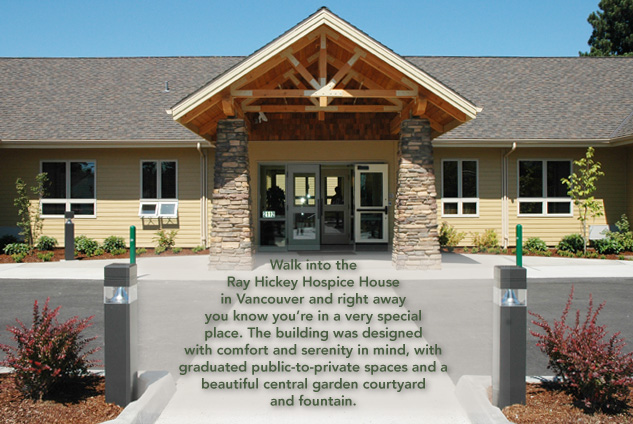
At the age of 97 he fell asleep for the last time on December 22, 2008, at
the
Ray
Hickey Hospice House (pic)
in Vancouver, WA.
Karl Illig is survived by his children, and Petra (Anchorage, AK),
Harald (Salt Lake City, UT), grandchildren
Peter, Lena (Anchorage, AK),
Sonya and
Sara (Austin, TX) and
Julian
(Vienna, Austria), great-granson Kinsti
(Vienna, Austria) and great-grand daughter Sasha (Austin, TX). He and
Renata had lead an amazing life. We
all miss them both.
|
RENATA ILLIG
Gedichte |


Karl M. Illig and daughter Petra A. Illig.
|
|
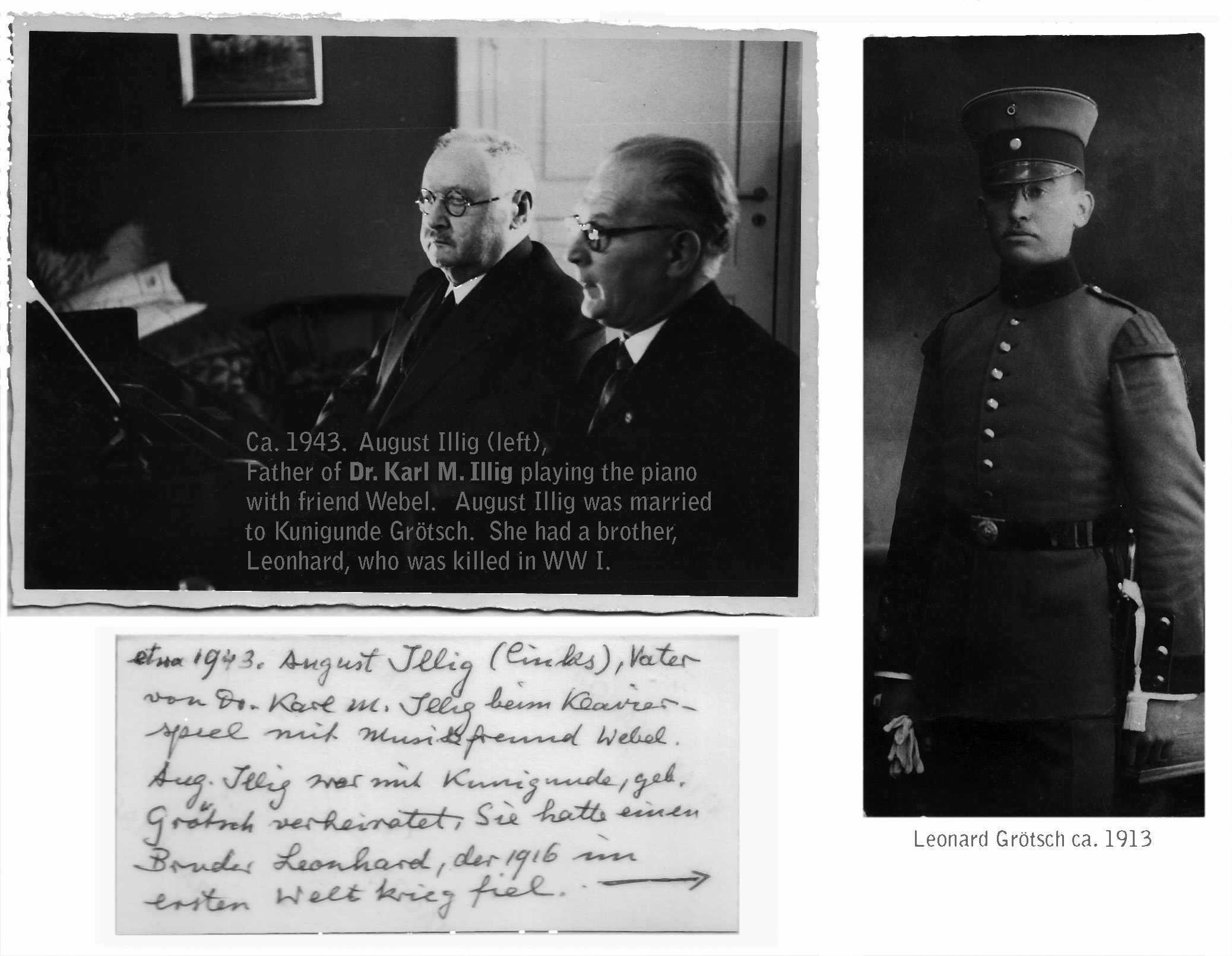

Ca. 1943.
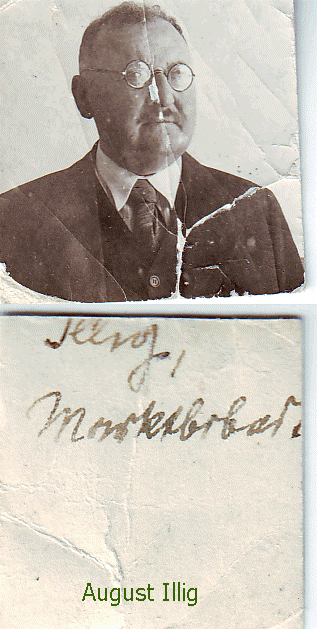
August Illig (left), father of Dr. Karl M. Illig,
playing the piano with friend Webel (center).
August Illig was married to Kunigunde Grötsch.
She had a brother, Leonhard (right), who was killed in WW I.
August Illig's Geburtshaus,
father of Karl Illig.
Pfarrkirche St. Gangolf is in the background.
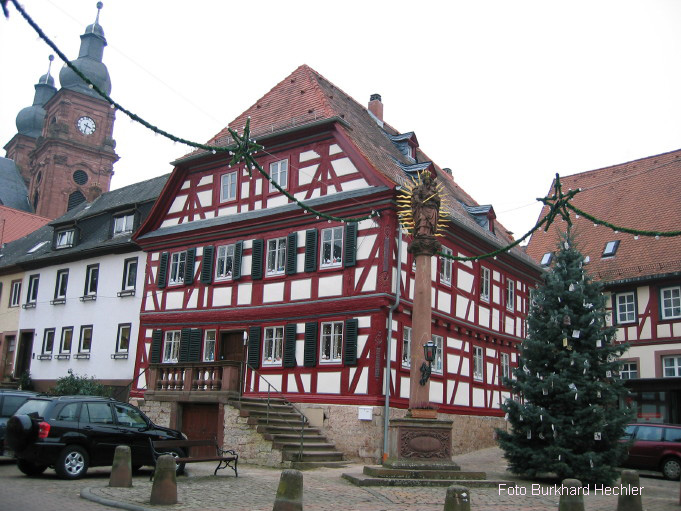
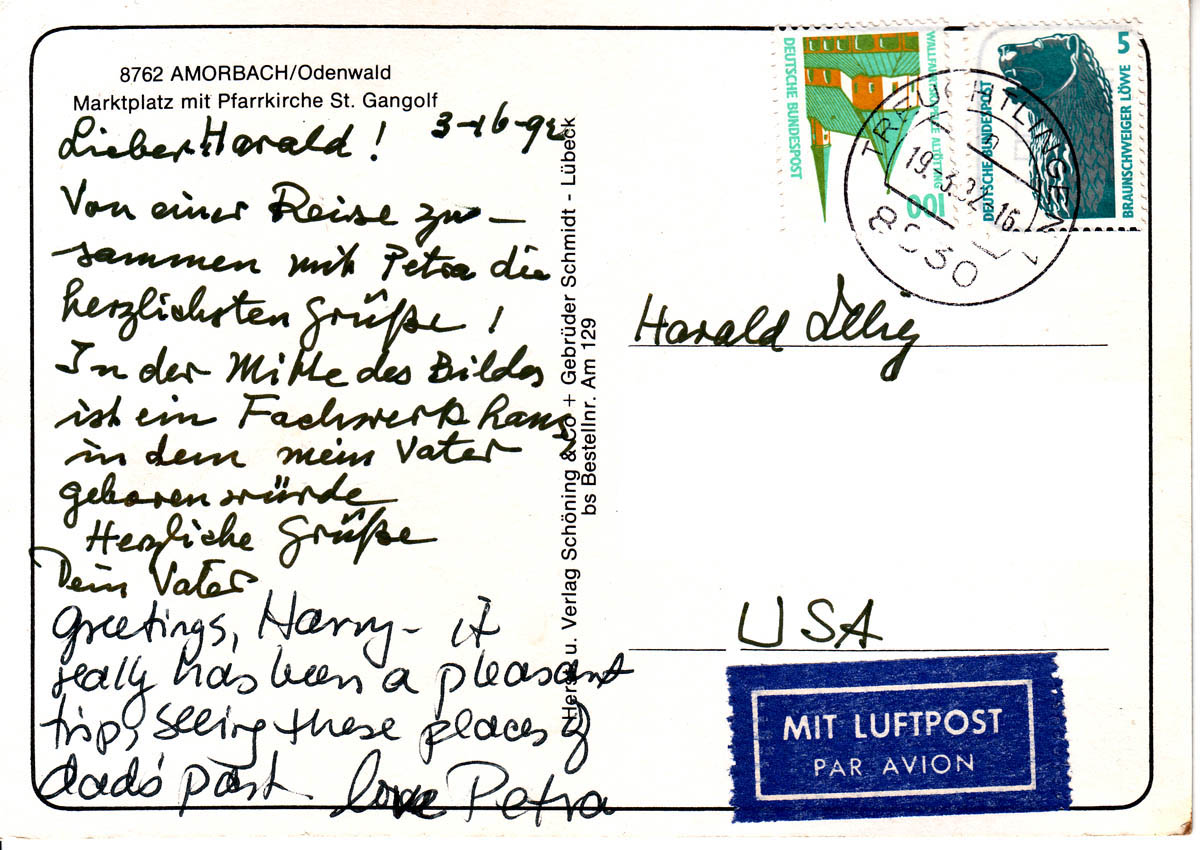
Postcard to Harald, 1992: Stockwerkhaus am Marktplatz in
Amorbach
Foto Burkhard Hechler
Read article - "TWO-EYEDNESS" AND "ONE -EYEDNESS"
OR
STEREOPSIS
AND THE ARTS OF PAINTING AND PHOTOGRAPHY
Amorbach:
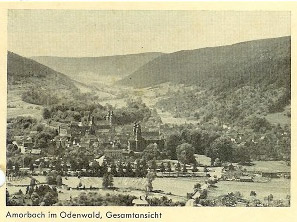
LINKS:
Spätlese
Wikipedia
Another View
Dropbox: Linda Ann Thompson 1945 - 2013
Sie
können Diese Seite übersetzen
You can translate this page.
Comments?
email
~ 2009 ~